Air source heat pumps represent the future of home heating in Devon, offering an energy-efficient, environmentally friendly alternative to traditional systems. This comprehensive guide focuses on two leading manufacturers—Mitsubishi and Vaillant—exploring their servicing requirements and helping you determine if your property is suitable for this innovative heating technology.
Understanding Air Source Heat Pumps
Air source heat pumps (ASHPs) extract heat from the outside air and transfer it into your home, working effectively even in temperatures as low as -15°C. Unlike traditional boilers that burn fuel to generate heat, ASHPs use electricity to power a refrigeration cycle that concentrates ambient heat from the air.
How They Work
- The outdoor unit draws in air across an evaporator containing refrigerant
- The refrigerant absorbs heat from the air and evaporates
- A compressor increases the temperature of the refrigerant
- The hot refrigerant transfers heat to your home's water system
- The cooled refrigerant returns to the evaporator to begin the cycle again
Environmental Benefits
- Significantly lower carbon emissions than gas or oil heating
- Can use electricity from renewable sources for zero-carbon heating
- Typical CO₂ savings of 2-5 tonnes per year compared to fossil fuel systems
- Helps Devon homeowners reduce their carbon footprint
While the initial investment for an air source heat pump system is higher than traditional heating systems, the operational costs can be significantly lower, especially when combined with good insulation and potentially qualifying for government incentives.
How Air Source Heat Pumps Work: Interactive Visual Guide
Air source heat pumps operate on a simple but ingenious principle: they extract heat from the outside air (even when it's cold) and transfer it into your home. Below is an interactive visualization showing how the different components work together to provide efficient heating for your Devon property.
How to Use the Animation
- Click the Start Animation button to visualize refrigerant flow
- Blue particles represent cool refrigerant returning to collect heat
- Red particles represent heated refrigerant transferring warmth to your home
- Click the i buttons to learn about each component's function
Mitsubishi vs. Vaillant: Leading Heat Pump Technologies
Both Mitsubishi and Vaillant are renowned manufacturers of high-quality air source heat pumps, each with their own strengths and unique features. Understanding the differences can help Devon homeowners make an informed decision.
| Feature | Mitsubishi Ecodan | Vaillant aroTHERM Plus |
|---|---|---|
| Efficiency | COP up to 5.1 | COP up to 5.4 |
| Output Range | 4kW to 14kW models | 3.5kW to 12kW models |
| Noise Level | As low as 45 dB(A) | As low as 42 dB(A) |
| Refrigerant | R32 (lower GWP) | R290 (natural refrigerant) |
| Control System | MELCloud with smartphone control | sensoAPP with smart control |
| Weather Compensation | Advanced weather tracking | Multi-sensor weather monitoring |
| Warranty | 7 years (with registered installation) | 7 years (with registered installation) |
Mitsubishi Ecodan Strengths
- Market-leading reputation with extensive installer network in Devon
- Excellent low-temperature performance for colder Devon winters
- Quiet operation with optional night mode
- Wide range of compatible indoor units for different property types
- Proven reliability with extensive UK installation base
Vaillant aroTHERM Plus Strengths
- Industry-leading efficiency with natural refrigerant
- Exceptionally quiet operation (ideal for densely populated areas)
- Produces higher flow temperatures (up to 75°C) for retrofitting
- Stylish German engineering with compact design
- Excellent integration with existing Vaillant systems
Both manufacturers offer MCS-certified systems that may qualify for government incentive schemes. As experienced installers of both Mitsubishi and Vaillant heat pumps across Devon, we can provide tailored recommendations based on your specific property and heating requirements.
Professional Servicing Requirements
Regular maintenance is crucial for keeping your air source heat pump operating at peak efficiency. Unlike traditional boilers, heat pumps have different servicing requirements and need to be maintained by technicians with specific qualifications.
Essential Annual Servicing Checklist
Outdoor Unit Checks:
- Inspect coil and fins for debris or damage
- Clean outdoor unit and remove any obstructions
- Check refrigerant levels and pressure
- Inspect electrical connections and components
- Clean condensate drain and pan
- Check fan motor and inspect fan blades
Indoor System Checks:
- Inspect circulation pump and flow rates
- Check system pressure and bleed radiators
- Test control systems and thermostats
- Examine buffer tank and connections
- Validate temperature differentials
- Test safety mechanisms and emergency operation
Manufacturer-Specific Servicing Requirements
Mitsubishi Ecodan Service Points
- Validate FTC controller operation and parameter settings
- Check MELCloud connectivity and remote diagnostics
- Inspect plate heat exchanger for scaling
- Test inverter drive and compressor functionality
- Validate temperature sensor calibration
- Review energy monitoring data for efficiency
Vaillant aroTHERM Service Points
- Check natural refrigerant circuit (specialist handling)
- Inspect sensitech valve and VRC 720 controller
- Test uniSTOR cylinder operation (if applicable)
- Validate eBUS communication system
- Check hydraulic station and expansion vessel
- Test sensoAPP connectivity and smart functions
Important: Warranty Considerations
Both Mitsubishi and Vaillant require annual servicing by qualified technicians to maintain the warranty. Installation and servicing must be by an MCS-certified heat pump installer.
We recommend scheduling your heat pump service during autumn, before the Devon winter sets in. This timing ensures your system is operating at peak efficiency when you need it most, preventing issues during the coldest months when the system is under the most stress.
Property Suitability: Is Your Devon Home Right for a Heat Pump?
Not all properties are equally suitable for air source heat pumps. Understanding the key factors that determine suitability can help Devon homeowners make informed decisions before investing in this technology.
Devon's Unique Climate Considerations
Devon's mild maritime climate makes it particularly well-suited for air source heat pumps compared to colder inland regions of the UK. With average winter temperatures in Exeter rarely dropping below 2°C, heat pumps maintain excellent efficiency year-round. Coastal areas like Exmouth and Sidmouth benefit from even milder temperatures, while properties in more elevated areas of Dartmoor may require careful system sizing to account for temperature variations.
Ideal Property Characteristics for Heat Pumps
Insulation & Energy Efficiency
- Well-insulated walls, roof, and floors
- Double or triple glazed windows
- Draught-proofed throughout
- EPC rating of C or above ideal
Heating System Compatibility
- Underfloor heating or large radiators
- Existing low-temperature system
- Zoned heating controls
- Modern hot water cylinder
Space & Installation Requirements
- Adequate outdoor space for the unit
- Good air flow around outdoor unit
- Space for a buffer tank internally
- Access for installation equipment
Property Type Suitability
Most Suitable:
- New-build properties
- Recently renovated homes
- Well-insulated bungalows
- Modern detached houses
Less Suitable:
- Listed buildings
- Older, solid-wall properties
- Flats with limited outdoor space
- Properties with poor insulation
Location & Climate Factors
Devon's climate is particularly well-suited to heat pumps, with:
- Milder winter temperatures than many UK regions
- Higher average ambient temperatures
- Coastal areas benefit from maritime climate buffer
- Rural properties often have ample space for installation
Common Retrofit Scenarios for Devon Properties
Oil to Heat Pump Conversion
Many rural Devon properties currently using oil boilers are excellent candidates for heat pump conversion, especially if:
- The property has been upgraded with modern insulation
- The existing radiator system is adequately sized or can be upgraded
- There's existing space for a hot water cylinder
- The homeowner wants to reduce carbon emissions and dependency on oil deliveries
Gas to Heat Pump Transition
Properties in Exeter and other urban areas currently on gas mains may consider heat pumps if:
- The property has undergone comprehensive energy efficiency improvements
- The homeowner wants to future-proof against rising gas prices
- There's sufficient space for the outdoor unit and buffer systems
- The electrical supply can be upgraded if necessary
Property Assessment is Essential
Before proceeding with any heat pump installation, we strongly recommend a thorough property assessment and heat loss calculation. This allows us to accurately determine:
- The exact heat pump capacity required for your Devon property
- Any necessary improvements to insulation or heating distribution
- The most suitable heat pump model and configuration
- Accurate running cost projections
- Whether a hybrid system might be more suitable for your property
I provide comprehensive property assessments across Devon, offering honest advice on whether your home is suitable for this technology.
Devon Heat Pump Case Studies
Victorian Terrace, St. Thomas, Exeter
This challenging retrofit involved upgrading insulation and installing larger radiators in key rooms. With careful system design, we achieved a 3.2 CoP ratio even in this older property.
Cottage Conversion, Topsham
Converting from an aging oil system, this riverside property now benefits from Vaillant's quiet operation and smart controls. The coastal location provides ideal operating conditions.
New Build, Cullompton
This modern eco-home features underfloor heating throughout, a 300L thermal store, and Veyvalinx smart controls. The system achieves exceptional efficiency with a 3.8 CoP ratio.
How Heat Pumps Integrate With Your Home's Heating System
Understanding how an air source heat pump connects to your existing heating system is crucial. This interactive wireframe house model demonstrates how heat pumps integrate with radiators, underfloor heating, and hot water cylinders in a typical Devon home.
Click the buttons below to see how a heat pump works with your home's heating system. Hover over components to learn their function.
How Heat Pumps Connect to Your Home
- The outdoor heat pump unit extracts heat from ambient air
- A buffer tank may be used to stabilize the system and prevent frequent on/off cycling
- Existing radiators can be used, though larger ones may be needed for optimal efficiency
- Underfloor heating works exceptionally well with heat pumps due to lower operating temperatures
- A dedicated hot water cylinder stores hot water for domestic use
- The entire system typically operates at lower temperatures (35-55°C) than traditional boilers
Visual Guide: Air Source Heat Pumps
To help you better understand air source heat pump systems, here are visual examples of installations we've completed across Devon, showcasing both Mitsubishi and Vaillant units in different property types.
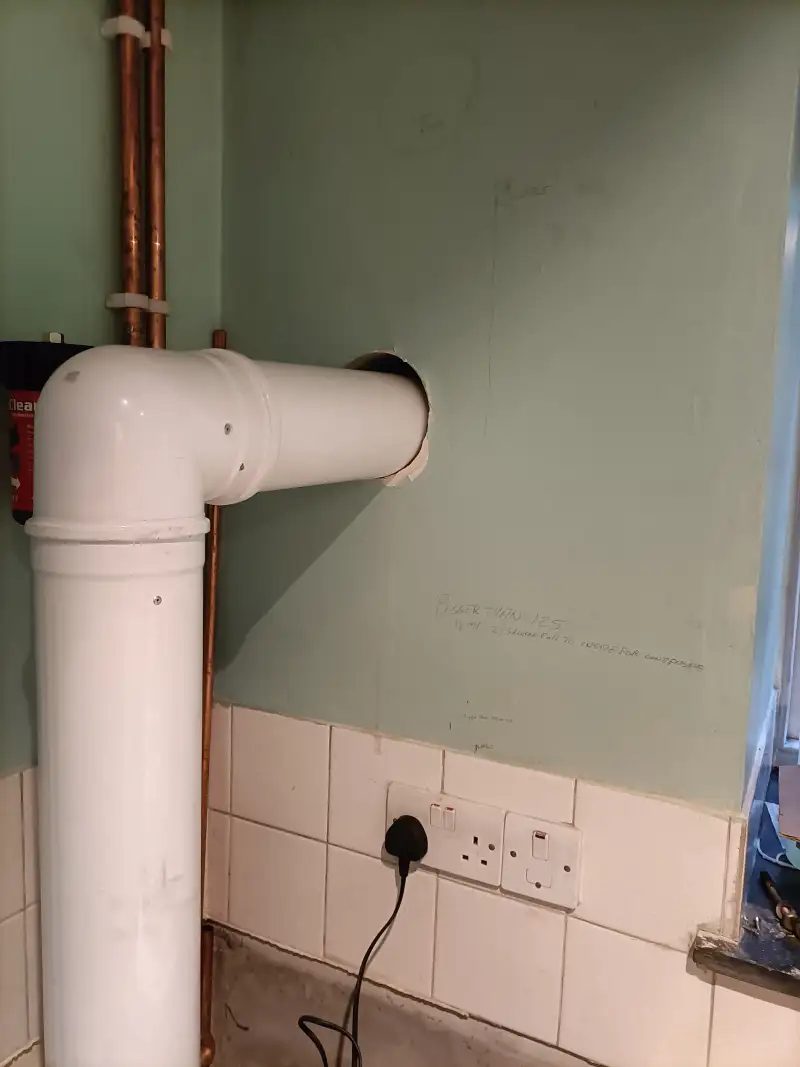
Mitsubishi Ecodan Installation
Vaillant aroTHERM Installation
Indoor System Components
Click or tap on any image to enlarge and view more details. Mitsubishi and Vaillant units must be fitted by MCS-certified installers; I handle the plumbing and heating side alongside them.
Frequently Asked Questions
Expertise in Air Source Heat Pump Technology
As experienced installers and service engineers for both Mitsubishi and Vaillant heat pump systems across Devon, we're committed to helping homeowners transition to efficient, environmentally friendly heating solutions. Our comprehensive approach includes:
- Thorough property assessments to determine heat pump suitability
- Honest advice on the most appropriate system for your specific needs
- Professional installation by an MCS-certified installer
- Annual servicing to maintain warranty coverage and optimal performance
- Emergency repairs with rapid response times throughout Devon
Whether you're looking to replace an existing heating system or exploring options for a new property, we'd be delighted to discuss how air source heat pump technology could benefit your Devon home. Contact us today for a no-obligation consultation and property assessment.
Ready to explore heat pump options for your property?
I'm happy to answer your questions and give personalized advice.
Contact Our Heat Pump Specialists